
Views: 0 Author: Site Editor Publish Time: 2025-09-18 Origin: Site


You can stop slit-in coil slitting problems by setting up your slitter rewinder machine the right way. You should check the machine often. Pick the correct blade for the job. Train operators so they know what to do. Knowing how a slitter rewinder, paper slitter and rewinder, and paper slitting machine work helps you be more exact. This also helps you avoid mistakes when working with rolls. If you follow best practices and use checklists, your work will go well.
If you find the main causes fast, use steps to stop problems, and look at times when the machine stops, you will have less downtime and better efficiency. These are important reasons to use a slitter rewinder.
Make sure your slitter rewinder is set up right to stop common problems. Check it often and keep it lined up well.
Use sharp and clean blades for smooth cuts. This helps stop edge burrs. Change dull blades right away to keep good quality.
Teach operators well about how to use the machine and fix issues. Staff who know what to do can spot and fix problems fast.
Have a regular plan to take care of your slitter rewinder. This keeps it working well and stops breakdowns. It also helps it work better.
Be careful when loading and unloading coils. Good handling stops damage and keeps the product good.
A slitter rewinder machine cuts big rolls into smaller strips. This helps you make rolls that fit your needs. You use these rolls for packaging, printing, or making things. The machine takes one large roll and slices it into many thin rolls. You can use paper, film, foil, or steel. The main job of the slitter rewinder is to make sure each strip is the right size and quality.
Tip: Picking the best slitter rewinder machine helps you work faster and waste less.
First, you put the master roll on the unwinder unit. The machine pulls the material into the slitting unit. Sharp blades cut the roll into strips. The tension control system keeps the material tight and smooth. This stops wrinkles or damage. After cutting, the rewinder rolls each strip onto its own core. You use the control panel to set how wide, fast, and tight you want to cut. Safety features keep you and your team safe while working.
Here is a table showing the main parts and what they do:
| Component | Function |
|---|---|
| Unwinder unit | Holds the big roll and feeds the material into the machine. |
| Slitting unit | Has the blades and does the cutting. |
| Tension control system | Keeps the material tight and stops damage. |
| Rewinder | Rolls up the cut strips onto new cores. |
| Drive system | Gives power and keeps everything moving together. |
| Control panel | Lets you change settings like tension, width, and speed. |
| Safety features | Protects workers with emergency stops and sensors. |
| Optional Features | Adds tools to help you work better and faster. |
You get good coil slitting when all parts work together. The machine uses tension levelers and drive systems to keep things smooth. You can change the settings for your material and job. If you know how each part works, you can find problems early and keep your machine working well.
When you use a slitter rewinder, you might see some problems. Knowing about these problems helps you find mistakes early. This keeps your work smooth and safe. Here are the main problems to look for:
Edge burrs are rough or sharp edges on the strips. These happen when blades get dull or are not lined up right. Burrs can hurt people or break other machines. To stop edge burrs, check your blades often. Change them if they are old or broken. Make sure the blade pressure and setup are correct.
Tip: Using sharp, clean blades and setting up the machine right helps stop edge burrs and makes your product better.
Camber means the strip bends instead of staying straight. This happens if the material is not flat or the machine is set up wrong. Bent strips can jam machines or cause more problems later. You can stop camber by checking if your material is flat before you start. Change the machine setup to keep strips straight.
Telescoping is when the slit rolls move sideways and look like a telescope. This happens if the tension is not right or the winding is uneven. Telescoped rolls are hard to use and may not fit in other machines. Set the right tension and watch the winding closely. Good tension keeps rolls tight and even.
Slit width variation means the strips are not all the same size. This is a big problem in coil plants. You might see this because of:
Material problems like changes in thickness or wavy edges
Equipment problems like old blades or bad setup
Operator mistakes like changing speed or not setting up right
To fix slit width variation, make sure your material is flat and thick enough. Check and sharpen blades often. Use a good tension control system. Train your team to set up the machine the right way every time.
Industry surveys say the most common slitting problems are tension issues, slow setup, long downtime, and edge trim control. Checking your machine often and training your team well helps you avoid these problems.
Setting up your slitter rewinder the right way helps you stop many problems. You need to look at the machine, line up the knives, and set tension. If you use a clear process, you get better results and stay safe. Here are the main steps to do before you start.
Knife alignment is very important in slitter setup. If knives are not lined up, you get rough edges and waste. Always use new industrial razor blades for best results. Old or broken blades make ragged edges and can hurt the material.
To line up the knives, do these steps:
Put new or sharp blades in the slitting unit.
Make sure each blade matches the marks for slit width.
Adjust the side pressure so blades cut clean but do not crush.
Set the shear angle to help cutting.
If you see deflection, put two knives together for more strength.
Check the knife height next to the spacer. Too much height can bend the knife.
Change dull blades right away.
Guide the web straight into the knives to keep cuts straight.
Tip: Always check knife alignment before every job. Even small mistakes can cause big problems later.
Tension control keeps your material tight and smooth as it moves. If tension is too loose, you get wrinkles or rolls that move sideways. If tension is too tight, you can get breaks or edge damage.
Use these tips for good tension control:
Keep tension steady to stop wrinkles and wavy edges.
Use closed-loop control systems. These adjust tension by themselves.
Install sensors like load cells and tachometers to measure tension.
Use good tension brakes and dancer rolls to keep tension even.
Check tension settings before every run.
Here is a table that shows what you should check for good tension and slit quality:
| Procedure Area | Description |
|---|---|
| Knife Settings | Set knives for clean cuts and better quality. |
| Tension Control | Adjust shafts, pressure, and roller alignment for steady tension. |
| Alignment of Components | Make sure blades and rewinding cores line up for best results. |
Note: Good tension control makes your product better and keeps your team safe.
You should check your slitter rewinder before every shift. This helps you find problems early and keeps your machine working well. Use a checklist so you do not miss anything.
Here is a checklist to use before you start:
Check all guards are in place and tight.
Test guard switches to make sure they work.
Look at blade guards for damage.
Make sure safety light curtains turn on at a 6-inch reach.
Test pull-cord emergency stops along the walkway.
Make sure ground fault circuit interrupters work.
Check control voltage (usually 24VDC) at operator stations.
Look at power cables for damage or bare wires.
Make sure motor overload settings match the machine’s nameplate.
Test beacon lights and alarms.
You should also check key parts of your slitter often. Here is a table with suggested times to check:
| Equipment Type | Inspection Interval |
|---|---|
| Pumps | Every 2,000 hours |
| Hydraulic tank | Every 1,500 hours |
| Solenoid valves | Every 1,000 hours |
| Cylinders (frequent use) | Every 1,000 hours |
| Cylinders (intermittent use) | Every 2,000 hours |
| Other hydraulic/pneumatic parts | Every 1,800-2,000 hours |
| Separators and knives | Visual check every 1,000 hours |
| Slitters with hydraulic clamp | Every 2,000 hours |
| Eccentric gap device | Every 2,000 hours |
Safety First: Never skip equipment checks. Small problems can quickly become big safety risks.
Before you start your slitter or paper slitter and rewinder, use this checklist:
Check all safety devices and guards.
Line up and set all knives.
Calibrate tension control systems.
Check rewinder shafts and cores.
Test emergency stops and alarms.
Make sure all settings are correct on the control panel.
Keep the work area clean and safe.
If you follow these steps, you set up your slitter rewinder for safe, high-quality work every time.
You need to handle coils with care when loading and unloading. Use the right equipment for the job. Always check the weight and size before you lift a coil. If you use a forklift, make sure the operator has training. Try to move each coil as few times as possible. Each extra move can cause damage, like nicks or dents on the edge. Even a small nick can ruin a whole roll. Place the coil gently onto supports or racks. Never drop or drag it.
Tip: Use soft materials, such as felt or polyurethane, on contact points to protect the coil surface.
Keeping coils clean is important for quality. Dust, oil, or dirt can stick to the surface and cause problems during slitting. Always wear clean gloves when you touch the material. Cover coils with paper or vinyl wraps to keep out dust and moisture. Make sure the slitter head and knife stripper rings are clean and set up right. This helps prevent scratches and marks. Use cascade rolls to support the material and stop it from bending or picking up dirt.
Use protective covers when moving or storing coils.
Clean the work area often.
Check equipment for oil leaks or loose parts.
Proper storage keeps your coils safe and ready for use. Store coils in a dry, climate-controlled place. This stops rust and corrosion. Keep them indoors or under a roof to protect from rain and sunlight. Use racks with padded supports to hold the coils upright. Make sure the base is stable and level. Cover each coil with a breathable fabric cover to keep out dust but let air flow. Avoid plastic wrap, which can trap moisture.
Here is a simple storage checklist:
| Storage Step | What to Do |
|---|---|
| Control temperature | Keep storage area cool and dry |
| Use padded racks | Prevent dents and scratches |
| Cover coils | Use fabric covers for dust protection |
| Inspect regularly | Look for rust, dirt, or damage |
| Label and organize | Mark each coil and keep them in order |
Note: Regular checks and good organization help you find problems early and keep your coils in top shape.
Picking the right blade and caring for it helps your slitter rewinder work well. You get better results and less waste. Your machine lasts longer when you do these things. Let’s see how to choose a blade, take care of it, and plan maintenance.
You need the right blade for your slitter or paper slitting machine. This helps you make clean cuts. Match the blade to your material and how you cut. Here are things to think about:
Material Type: Paper, film, foil, or metal need different blade hardness and slitting ways.
Cutting Method: Shear, score, and razor cutting work best for certain jobs. Shear cutting is good for thick stuff. Razor cutting works for thin films and paper.
Blade Geometry: Blade thickness, bevel angle, and diameter change how you cut.
Operating Speed: Fast slitting needs blades that last longer.
Edge Quality Requirements: If you want smooth edges, use sharp blades.
Type of Material to Be Cut: Some things, like coated paper or metal foil, need special blades.
Operating Environment: Humidity and chemicals can change what blade you pick.
Production Efficiency and Cost: Good blades cost more but last longer and save money.
Think about what the blade is made of. The table below shows how blade materials work for different jobs:
| Material Type | Durability | Suitable Materials | Estimated Lifespan |
|---|---|---|---|
| Carbon Steel | Low | Standard paper, thin films | 50–200 hours |
| Stainless Steel | Medium | Aluminum foil, chemically coated materials | 200–500 hours |
| High-Speed Steel | High | Thick plastic films, composite materials | 500–800 hours |
| Tungsten Carbide | Highest | Metal foil, thick cardboard | 800–1500 hours |
If you pick the right blade, you cut better and stop downtime. For tough jobs, tungsten carbide blades work best. Some blades have coatings to last longer and cut smoother.
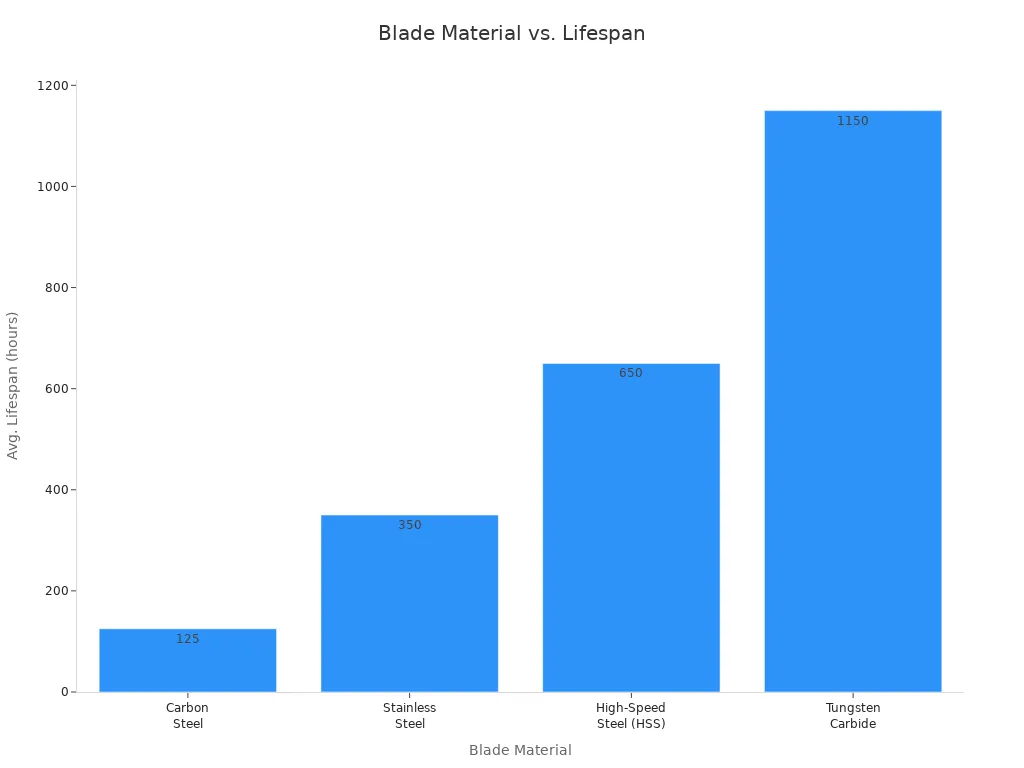
Tip: Always use a blade that matches your material and cutting way. This helps you get good results and keeps your slitter rewinder working well.
Taking care of blades is important. Sharp, clean blades make good cuts and help your machine last. Dull or broken blades can make rough edges and waste. They can even hurt your slitter rewinder.
Here are easy steps for blade care:
Check if blades are sharp before each shift. Look for chips or cracks.
Clean blades after you use them to remove dust or glue.
Store extra blades in a dry, safe place so they do not rust.
Use the right tools when you change blades. This stops bending or chipping.
Replace blades when you see wear. Do not wait for them to break.
Blade care keeps your slitter running well. Studies show most slitter rewinder problems happen because of poor maintenance, especially blade care. Sharp, clean blades give better cuts and less waste.
Note: Good blade care saves money by stopping waste and repairs.
A good maintenance plan helps you stop breakdowns. It keeps your paper slitter and rewinder working well. Check and fix your machine often. This helps you find small problems before they get big.
Here is a simple maintenance plan:
| Frequency | Maintenance Tasks |
|---|---|
| Daily | Check blade edges for wear, clean sensors, test static eliminators, empty dust collectors, listen for odd sounds. |
| Weekly | Measure blade holder runout, calibrate sensors, oil shafts, test emergency stops, check roller alignment, clean spreader rolls. |
| Monthly | Change blades, calibrate tension system, check brake/clutch, check static control, check airflow, update records. |
Also:
Check tension and alignment often to keep web tension steady.
Watch blade sharpness to stop jams and bad cuts.
Write down all maintenance and blade changes.
Blades last between 200 and 500 hours, depending on what you cut and how fast. Regular checks help you know when to sharpen or replace blades. Finding wear early stops downtime and saves money.
Tip: Set reminders for daily, weekly, and monthly checks. This helps you remember and not miss maintenance.
Regular maintenance does more than keep your machine running. It makes your product better and keeps your team safe. When you follow a good plan, your slitter rewinder works well and you avoid big problems.
You need good training to use a slitter rewinder safely. Training classes teach you the right steps for coil slitting. You can join a Coil Processing Certificate seminar. It lasts two days and covers coil processing basics. The seminar uses lessons and videos to show slitting, leveling, shearing, and blanking. You can also take Coil Pro Training. It teaches about operation, safety, and maintenance. This training has classroom lessons on slitting theory and tooling setup. You can go to classes onsite or at Coil Pro. These programs help new operators and experienced workers. They also help engineers, designers, set-up staff, quality control, and managers learn more.
Tip: Training helps you follow the right steps and make fewer mistakes when setting up and using a slitter.
You must know how to fix problems fast when using a slitter. Good training teaches you how to find and solve issues. If you understand the machine, you can spot trouble early. Training helps you fix problems better and keeps your team safe. You can use a table to see common problems and ways to fix them:
| Problem | Causes | Solutions |
|---|---|---|
| Poor Edge Quality | Wrong knife clearance, dull blades, bad tension | Check knives, fix clearance, watch tension, use good blades |
| Camber and Twist in Strips | Uneven knife wear, bad setup, uneven pressure | Set up knives evenly, check slitter heads, keep tension steady |
| Telescoping or Cross Winding | Drum not lined up, uneven tension, bad winding | Check recoiler, use tension control, wind rolls the same way |
| Knife Breakage or Premature Wear | Wrong knife type, fast speed, hard spots, bad lubrication | Use the right knife, slow down, check coils, oil knives right |
| Inconsistent Strip Widths | Bad knife spot, heat changes, worn spacers | Use digital tools, watch for heat, keep spacers in good shape |
Note: Training helps you fix problems quickly and keeps production moving.
You should always try to make coil slitting better. Regular training helps you find defects and make changes. Check and change blades often to keep them sharp. Make sure tension and alignment are good to stop bending. Lean methods help you set up faster and waste less. Look at data to find problems and fix them. Training helps you see issues early. You can build a zero-defect culture by focusing on quality and improvement.
Check blades often
Keep tension and alignment good
Use lean methods to save time
Study data to improve results
Train operators to find and fix problems
Focus on zero defects
Continuous improvement means fewer defects and better quality every time you use a slitter rewinder.
You can stop most slit-in coil slitting problems by being careful. Set up the slitter rewinder with care every time. Keep your machine in good shape with regular checks. Train operators well so they know what to do. Always look over your paper slitter and rewinder before each job. Handle every roll gently to keep it in good shape for any use. Use a short checklist to find problems early.
Lean manufacturing and regular audits help you make your process and product better as time goes on.
| Key Aspect | Description |
|---|---|
| Ongoing Education | Learn new tips for paper slitting machines to get better results. |
A slitter rewinder cuts big rolls into smaller strips. It helps you make rolls that fit your needs. You can use it for paper, film, foil, or metal.
Check blades every day for dullness or damage. Replace blades when they look worn out. Most blades last 200 to 500 hours, depending on what you cut and how fast.
Slit width variation happens if your material thickness changes. It also happens when blades get dull or the setup is wrong. You can stop this by checking your material, using sharp blades, and setting up the machine right.
Keep your slitter rewinder safe by checking guards and emergency stops. Follow a regular maintenance plan. Train operators and use safety features like alarms and light curtains.
Yes, you can use a slitter rewinder for many materials. It works for paper, plastic film, foil, and steel. Pick the right blade and change machine settings for each type.